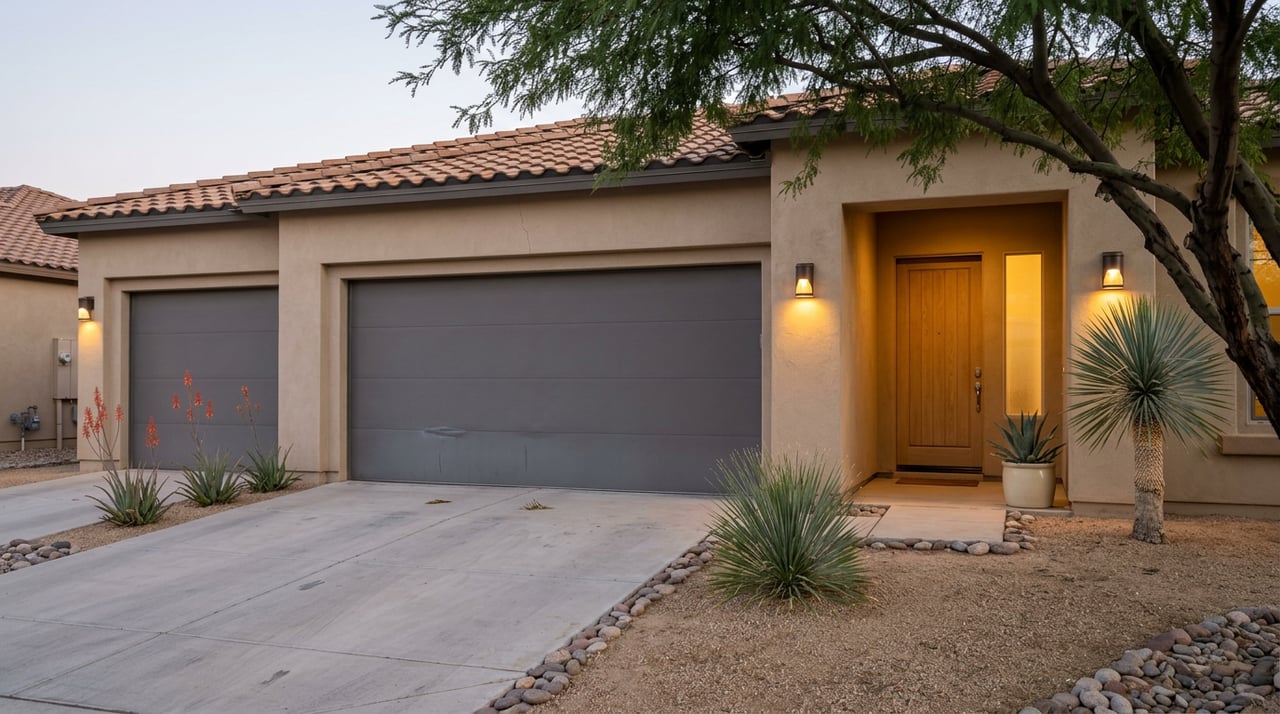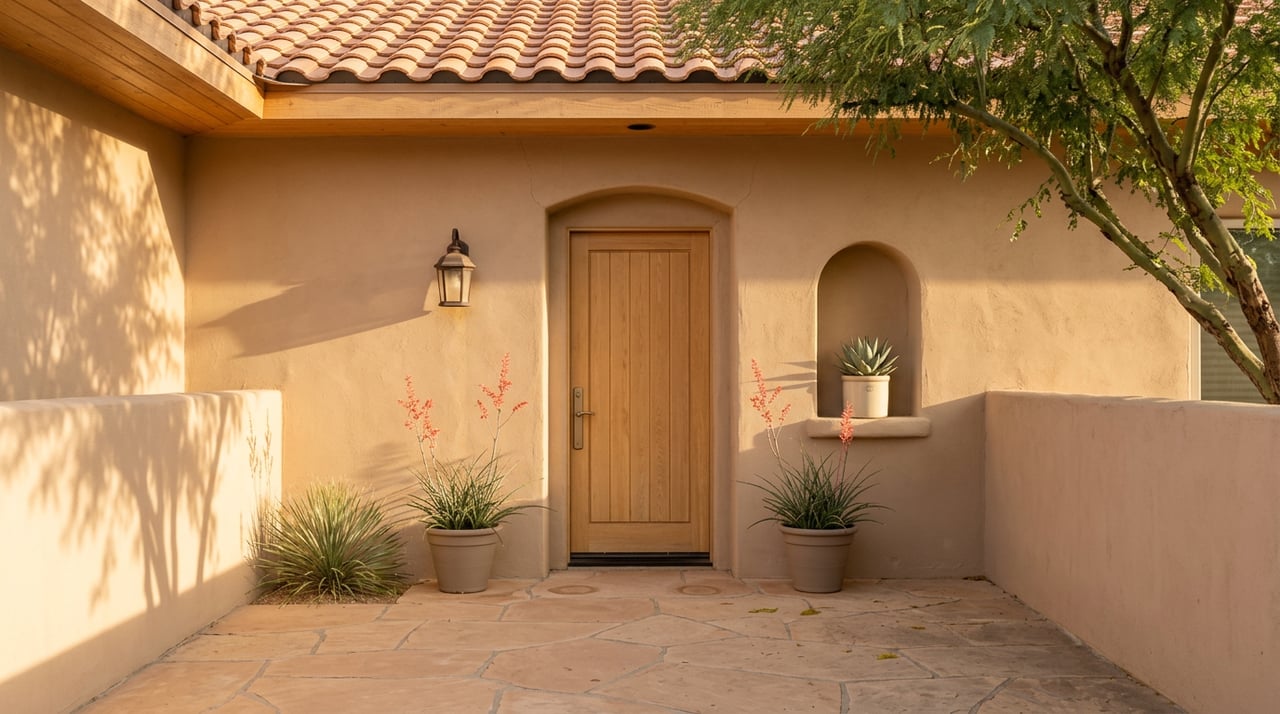
Most Somerton offers get written on FHA or conventional financing out of habit. That habit costs money. Every single-family home inside the 85350 zip sits in a USDA-eligible rural area, which means a qualified buyer can close with zero down, no monthly mortgage insurance, and a rate below what FHA is quoting the same week. The program is called the Section 502 Guaranteed loan, and in a market where the June 2026 median sale price is near $288,000 with homes moving in about 52 days, it fits Somerton's price band almost perfectly.
The catch is not the income cap that most first-time buyers worry about. It's the appraisal. USDA underwriters apply property standards that a lot of Somerton's older south-of-95 housing stock and irrigated-acreage listings quietly fail. If you understand where those trip points are before you write an offer, USDA saves you real money. If you find out during underwriting, you lose the house and start over on a new loan program with a compressed clock.
Why Somerton is USDA territory, top to bottom
Somerton is an incorporated city of roughly 14,400 residents, seated in the Yuma Valley about 12 miles south of Yuma on U.S. 95. Its population sits well under the USDA's 20,000-resident ceiling for non-metro eligibility, and it is not inside a Metropolitan Statistical Area, so every address in the 85350 zip code qualifies under the property-location rule. USDA classifies an area as rural if it has no more than 10,000 residents, or 10,001 to 20,000 residents outside an MSA with a documented lack of affordable mortgage credit. Somerton clears that on all three counts.
That location eligibility is the part buyers don't have to argue for. Everything after that is where the program tightens up.
A USDA loan in Somerton isn't a fallback. For a buyer who fits the income profile, it's usually the cheapest money on the table.
What the program actually offers, in Somerton terms
The 502 Guaranteed loan is meant for low- to moderate-income buyers, with no down payment, lower mortgage insurance than FHA, and interest rates that run below market because of the government guarantee. The 2026 upfront guarantee fee is 1.0% of the loan amount, financeable, plus a 0.35% annual fee, both cheaper than FHA's equivalent charges.
For 2026, the standard USDA income limit is $119,850 for households of up to four and $158,250 for households of up to eight in most areas of the country, though at least one industry tracker publishes a lower $112,450 baseline for the same period. The Yuma County figure is what actually governs a Somerton file. Any lender pulling the file will confirm it against the USDA's eligibility tool before pre-approval.
On the loan-size side, the 2026 USDA area loan limit for Yuma County is $324,700 effective February 10, 2026. That limit applies to the Direct program and functions as a soft ceiling for the Guaranteed program on modest-income files. Read against Somerton's $288,000 median, most existing-home purchases land comfortably below it.
New construction is a different conversation. Somerton's active new-home communities list from $378,950 up to $645,655, with plans running 1,257 to 2,747 square feet. A buyer stretching for a spec home in Los Mezquites 4 or Barkley Ranch 8 needs to check the actual eligible loan amount against household income, not just against the property price.
Where these deals actually break: the appraisal
This is the section most online USDA guides skip. USDA appraisals are held to HUD Handbook 4000.1 minimum property requirements, which means the appraiser is not just estimating value. They're inspecting for habitability, safety, and structural soundness on the agency's checklist.
In Somerton, the recurring flags are:
- Evaporative coolers acting as the primary cooling source instead of central HVAC, common in mid-1990s and older homes in Valle Del Sol and parts of Santa Clara Estates
- Roof life under three years remaining, which the appraiser will call out on tile-and-underlayment roofs that haven't been re-felted
- Peeling exterior paint on pre-1978 homes, which triggers a lead-based-paint clearance requirement
- Well and septic systems on unincorporated acreage listings north of Jefferson Street, which need current potability tests and a septic certification within 120 days of closing
- Any active commercial agricultural use on the parcel, which disqualifies the property outright because USDA loans cannot be used for farms, rental properties, vacation homes, or other income-producing properties
- In-ground pools without functional safety fencing meeting local code
Somerton's inventory mix makes the last two flags real, not theoretical. The buyer pool here includes acreage-seekers looking for irrigated lots near the Cocopah Rio Colorado Golf Course corridor, and many of those parcels carry active irrigation rights that a listing agent may describe as a feature. Under USDA rules, if that acreage is being farmed for income, the file is dead on the appraisal.
The household-income trap
The income cap catches more Somerton buyers than the appraisal, and it catches them for a reason that is not obvious from the loan application. The limits apply to all income-producing members of the household, not only the applicants on the loan. Any income earned by adults living in the home, but not listed on the loan application, must still be included when determining eligibility.
In practice, that means a young couple buying their first home in Las Estrellas, with a parent living with them who draws Social Security and works part-time at a packing shed, has to count all of it. A working adult child home from Arizona Western College and picking up shifts at MCAS Yuma counts. USDA counts non-borrowing spouse income, adult-child income, and other earners in the household, and lenders are required to project 12 months forward from closing.
There are legitimate deductions. Actual childcare costs for children under 12 come off the calculation, so $1,200 per month in daycare is $14,400 off gross income, and a household at $125,000 minus $14,400 in verified childcare drops to $110,600, back inside the limit. Medical expenses for elderly or disabled household members can also be deducted. These are the moves that keep otherwise-qualified Somerton families in the program, and they need to be built into the file at pre-approval, not discovered later.
A sequence that actually survives underwriting
If you are writing on a Somerton home in the next 30 to 60 days and want the USDA option on the table, this is the order that works:
- Verify the property address on the USDA eligibility map before you tour, not after. The whole 85350 zip qualifies, but confirm the specific parcel is not annexed into an ineligible pocket.
- Get a full household-income worksheet done at pre-approval, including any adult household member who is not on the loan. Deduct verified childcare and qualifying medical expenses on paper.
- Ask the listing agent for the age of the roof, HVAC system, and any well or septic system on the property. Get answers in writing before the inspection period.
- On homes older than 1978, confirm exterior paint condition during the walkthrough. Peeling paint is a repair the seller has to address before USDA will fund.
- On acreage listings, confirm in writing that the irrigation-eligible land is not currently producing income. If a tenant farmer is on the parcel, the deal is a conventional or portfolio-loan file, not USDA.
- Build a 45-day close into the offer. USDA files run slightly slower than FHA because of the agency's conditional-commitment step, and the Yuma-area lender pipeline moves at Yuma speed, not Phoenix speed.
Short FAQ
Can I use a USDA loan on new construction in Los Mezquites 4 or Barkley Ranch 8?
Yes, if the household income fits and the finished appraised value works against the Yuma County figure. New construction adds one wrinkle: the builder needs to provide a one-year warranty and the home must be complete before final USDA underwriting, not sold as a to-be-built shell.
Does USDA work for a manufactured home in Somerton?
Only on a permanent foundation, titled as real property, and typically only on new units the year of purchase. Most of Somerton's existing manufactured-home inventory does not qualify. FHA is usually the better program for those files.
What if my income is just over the cap?
Run the deductions first. USDA allows deductions for qualified childcare expenses for children aged 12 and under, so a household $2,000 over the limit with documented $5,000 in annual childcare costs would still be eligible. If the file still doesn't fit after deductions, an FHA loan with 3.5% down is the next-best option on the same house.
Does a VA loan beat USDA for a military buyer?
For active-duty and veteran buyers with entitlement, VA is usually cheaper because there is no annual mortgage insurance and no income cap. USDA is the answer for civilian buyers, not for MCAS Yuma households with full VA eligibility.
If you are weighing an offer on a Somerton home and want to know what your household actually qualifies for before you write, the fastest path is to run the numbers with someone who can do both sides of the file. Osvaldo Olivares works as a REALTOR® and a licensed loan officer, which means the pre-approval, the offer strategy, and the appraisal conversation all sit under one roof. Get a free home valuation and a straight answer on financing before you tour your next property.